Denver has once again become the global crossroads of geospatial innovation. At Geo Week 2026, technology leaders, surveyors, engineers, drone operators and decision-makers gathered not only to showcase tools and platforms, but to redefine the trajectory of the spatial sciences.
The message resonating across keynotes, panels and the exhibition floor is clear: geospatial technologies are entering a new phase — an Age of Intelligence — where AI, automation and high-precision sensing converge to reshape how we capture, interpret and manage reality.
The Age of Intelligence
Held at the Colorado Convention Center, this year’s Geo Week confirmed its position as one of the most influential international gatherings for the geospatial, AEC and 3D reality capture sectors.
The defining narrative emerged during the keynote delivered by Burkhard Boeckem, Chief Technology Officer at Hexagon AB. His address framed the current moment as the beginning of an “Age of Intelligence,” where advanced analytics, artificial intelligence, digital twins and autonomous systems are no longer experimental add-ons, but structural components of operational workflows.
In this paradigm, data is not simply collected — it is continuously interpreted, enriched and operationalized.
AI, Digital Twins and Integrated Reality Capture
Across more than fifty conference sessions, artificial intelligence emerged as a transversal theme. Automated feature extraction from LiDAR datasets, predictive analytics embedded within digital twins, and cloud-native processing platforms illustrated how machine learning is becoming embedded in geospatial pipelines.
Discussions on wide-area mapping strategies, ground sample distance (GSD) interpretation and the comparative performance of UAV, helicopter and terrestrial acquisition methods provided valuable operational insights. The convergence between uncrewed systems and geospatial analytics was particularly evident, reinforcing the operational maturity of drone-based surveying and inspection.
What clearly emerged is a transition from static mapping products to dynamic spatial intelligence platforms — continuously updated, interoperable and decision-oriented.
Innovation Ecosystems on the Exhibition Floor
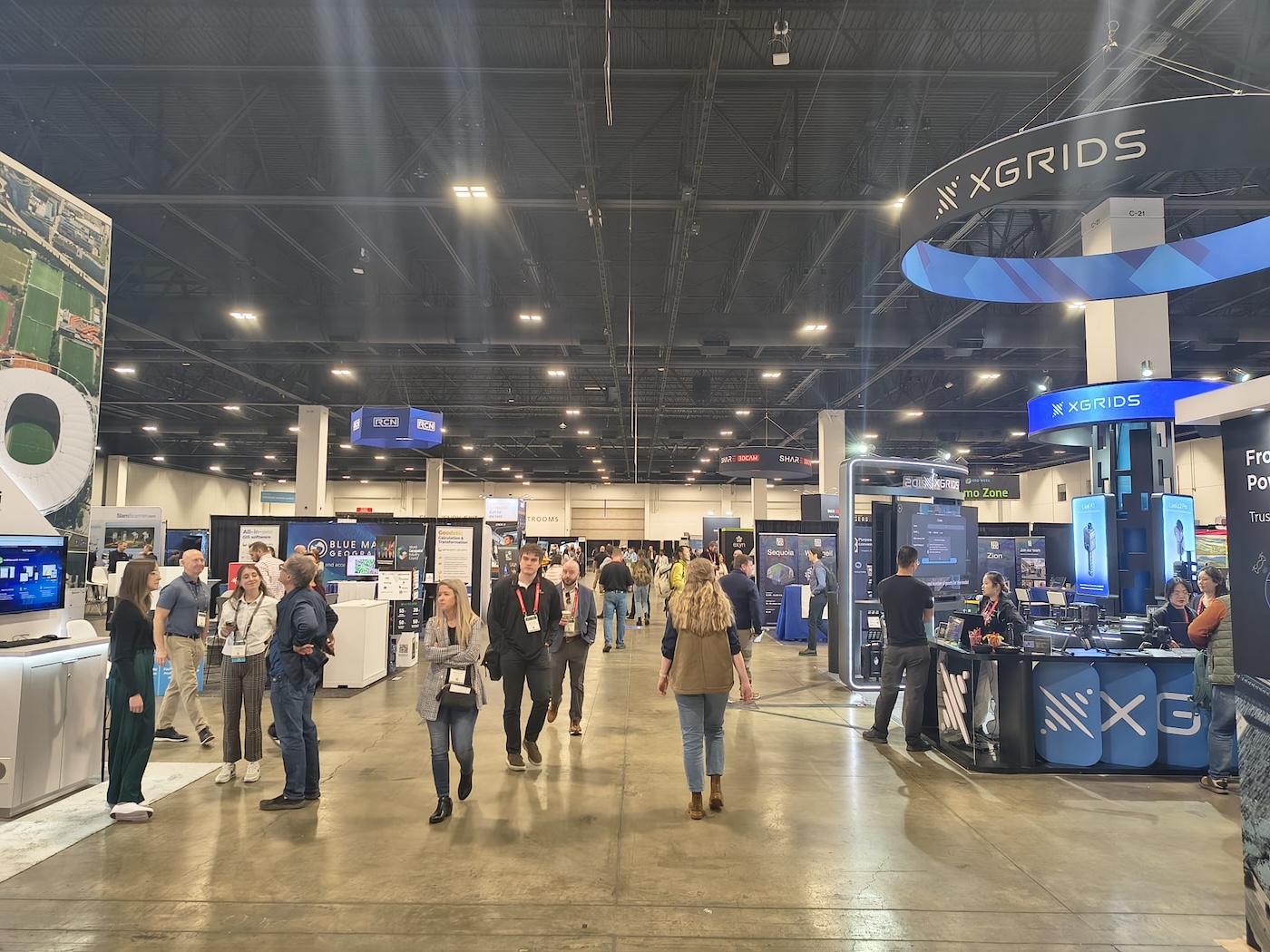
The exhibition hall — hosting hundreds of exhibitors from more than twenty countries — functioned as a living laboratory of applied innovation.
The “Pitch the Press” sessions highlighted emerging solutions in LiDAR hardware, SLAM-based mobile mapping systems and AI-assisted data processing. The competitive edge is increasingly defined not only by sensor precision, but by intelligent automation, interoperability and seamless integration into digital ecosystems.
The industry’s competitive landscape is evolving from hardware-centric competition toward platform-oriented strategies, where data environments, cloud infrastructures and service integration determine long-term value.
Workforce, Leadership and Inclusion
Geo Week 2026 also addressed a strategic dimension often overlooked in technology-driven events: people.
Panels and networking initiatives explored recruitment challenges, interdisciplinary skill gaps and leadership transformation. The first “Women in Geospatial” meet-up signaled growing awareness that innovation ecosystems depend on inclusive professional communities.
As automation expands, the human role evolves. AI literacy, data governance expertise, ethical oversight and cross-disciplinary communication are becoming essential competencies in the spatial economy.
GEOmedia Reporting from Denver
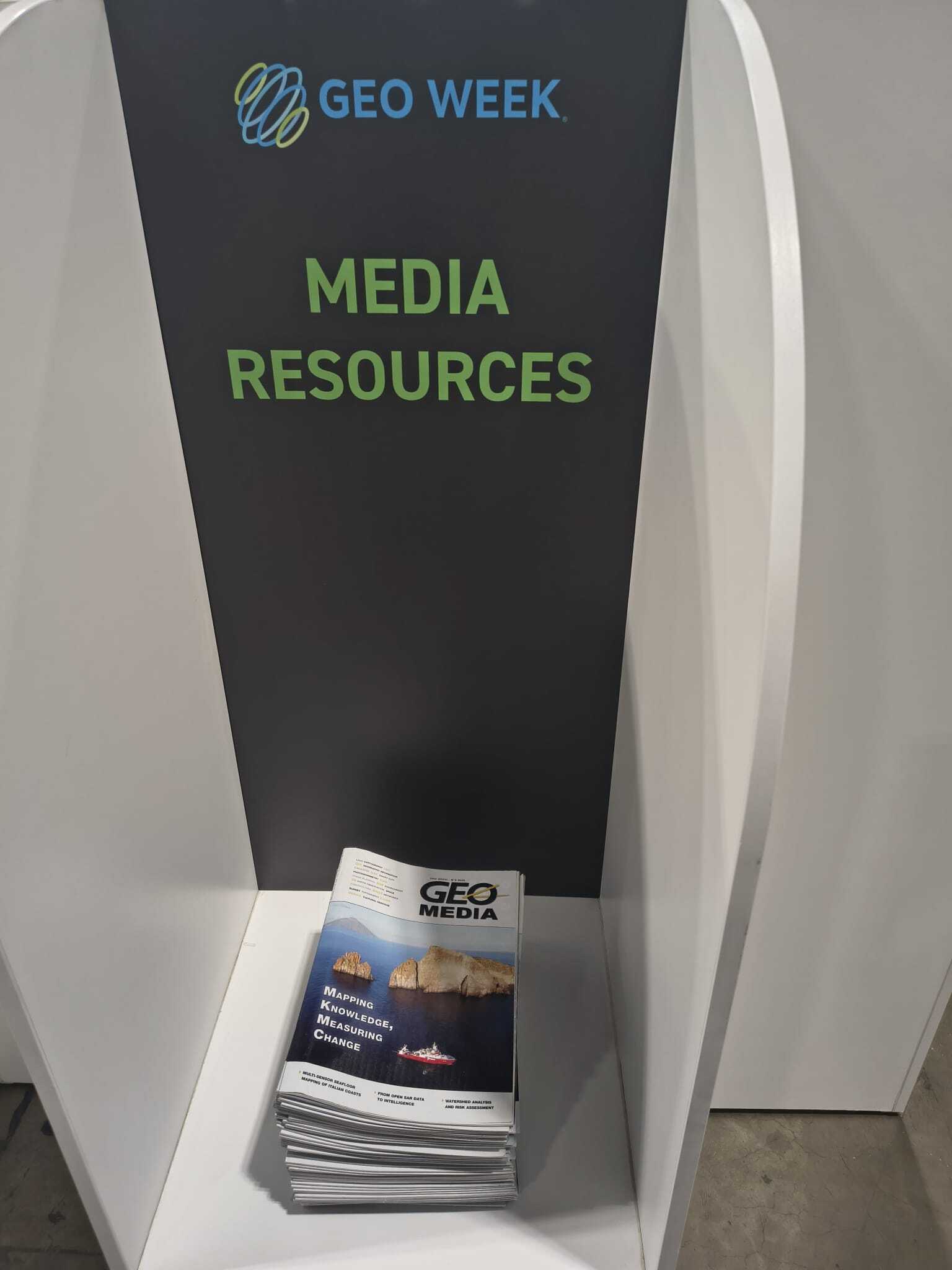
Among the international media attending the event, GEOmedia was present on site in Denver, documenting the key discussions, technological launches and strategic visions shaping this edition.
Through direct participation in keynote briefings, technical sessions and exhibition floor exchanges, GEOmedia captured firsthand the evolving narrative of a sector redefining itself around intelligent data ecosystems. From AI-driven workflows to workforce transformation, the reporting confirms that geospatial is not simply adopting new tools — it is restructuring its identity around integration, automation and knowledge-based decision processes.