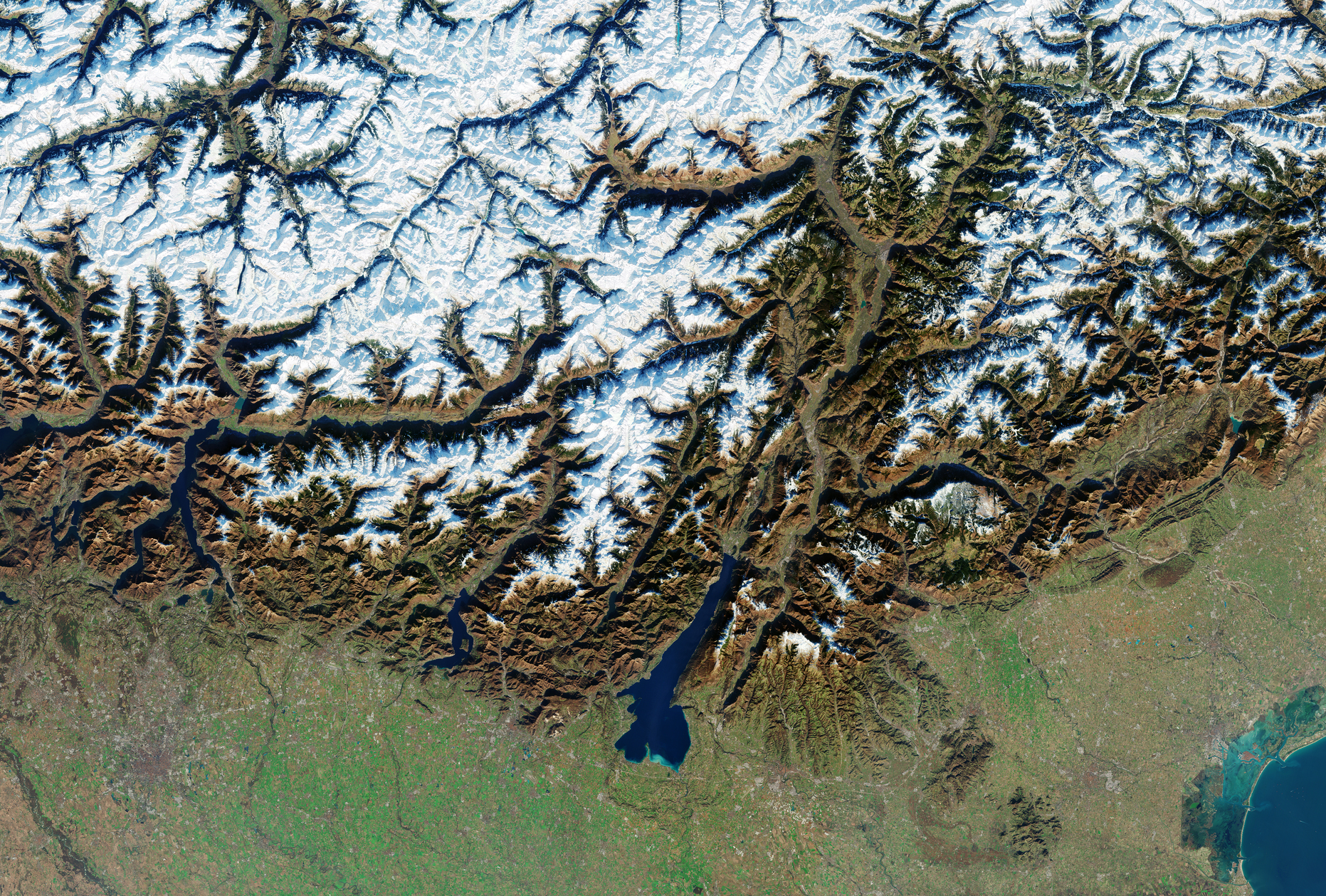
Con l'apertura ufficiale delle Olimpiadi Invernali del 2026 la missione Copernicus Sentinel-2 ci offre una vista straordinaria del nord Italia, mettendo in evidenza diverse importanti località olimpiche.
Note anche come Giochi di Milano-Cortina, le Olimpiadi di quest'anno sono geograficamente distribuite, con eventi che si svolgono simultaneamente in diverse regioni e sedi del nord Italia, tra cui Milano, Bormio, Livigno, Anterselva, Cortina D'Ampezzo, Predazzo, Tesero e Verona.
La parte superiore di questa immagine, priva di nuvole, è dominata dalle montagne e dalle valli delle Alpi, dove si trova la maggior parte delle località. Con un click sui cerchi nell’immagine online di ESA le località possono essere chiaramente individuate.
A nord-ovest si trova Cortina D'Ampezzo, la città che dà il nome ai Giochi di quest'anno. Spesso chiamata la Perla dei Dolomiti, Cortina si trova nel cuore di queste montagne imponenti: è anche un sito Patrimonio Mondiale dell'UNESCO. Rinomata località di sport invernali, Cortina ospitò già le Olimpiadi invernali del 1956.
La cerimonia di apertura di quest'anno si è tenuta allo Stadio San Siro di Milano, visibile come un'area grigia incastonata sotto le Alpi, nell'angolo in basso a sinistra dell'immagine. Milano è la seconda città più popolosa d'Italia dopo Roma, con la sua più ampia area metropolitana che si estende in Lombardia e nell'est del Piemonte.
Più ad est spiccano al centro dell'immagine le acque blu intenso del Lago di Garda. Con una superficie di 370 km² Garda è il lago più grande d'Italia e il terzo più grande della regione alpina.
Ad est del Lago di Garda si trova la città di Verona, che ospiterà la cerimonia di chiusura, concludendo le due settimane di eventi sportivi. La storica architettura urbana di Verona, come la rinomata Arena (il suo anfiteatro romano circolare), ha valso alla città lo status di Patrimonio dell'Umanità dell'UNESCO. Il 6 marzo l'Arena ospiterà anche la cerimonia di apertura dei Giochi Paralimpici Invernali, che segnano il 50º anniversario dei primi Giochi Paralimpici Invernali.
Spostandoci più ad ovest, in basso a destra si trova un’ altra famosa località di riferimento italiana: i colori turchesi della laguna veneziana, a forma di mezzaluna, e delle isole che compongono la città galleggiante di Venezia, lungo la costa adriatica.
Scarica immagine Hi-Res (56,79 MB - .JPG)
Scarica immagine Hi-Res (429,60 MB - .TIF)
---
Olympic view
With the 2026 Winter Olympics officially opening today, the Copernicus Sentinel-2 mission brings us a striking view of northern Italy, highlighting several key Olympic venues.
Also known as the Milano Cortina Games, this year’s Olympics are geographically widespread, with events taking place simultaneously in different regions and venues across northern Italy, including Milan, Bormio, Livigno, Anterselva, Cortina D’Ampezzo, Predazzo, Tesero and Verona.
The upper part of this cloud-free image is dominated by the mountains and valleys of the Alps, where most venues are situated. Click on the circles to locate them on the image.
To the northwest lies Cortina D’Ampezzo, the town that lends its name to this year’s Games. Often called the Pearl of the Dolomites, Cortina sits at the heart of these dramatic mountains – also a UNESCO world heritage site. A renowned winter sports resort, Cortina also hosted the 1956 Winter Olympics.
This year’s opening ceremony will be held at the San Siro Stadium in Milan, visible as a grey area nestling below the Alps in the lower left corner of the image. Milan is Italy’s second-most populous city after Rome, with its wider metropolitan area extending across Lombardy and eastern Piedmont.
Further east, the deep blue waters of Lake Garda stand out in the centre of the image. Covering 370 sq km, Garda is the largest lake in Italy and the third largest in the Alpine region.
East of Lake Garda is the city of Verona, which will host the closing ceremony, bringing the two weeks of sporting events to an end. Verona’s historic urban architecture, such as the renowned Arena – its circular Roman amphitheatre ̶ have earned it UNESCO World Heritage Site status. On 6 March, the Arena will also host the opening ceremony of the Paralympic Winter Games, marking the 50th anniversary of the first Paralympic Winter Games.
Moving further to the west, in the bottom right, is another famous Italian landmark: the turquoise colours of the crescent-shaped Venetian lagoon and the islands that make up the floating city of Venice along the Adriatic coast.
[Credits: contains modified Copernicus Sentinel data (2025), processed by ESA - Translation: Gianluca Pititto]