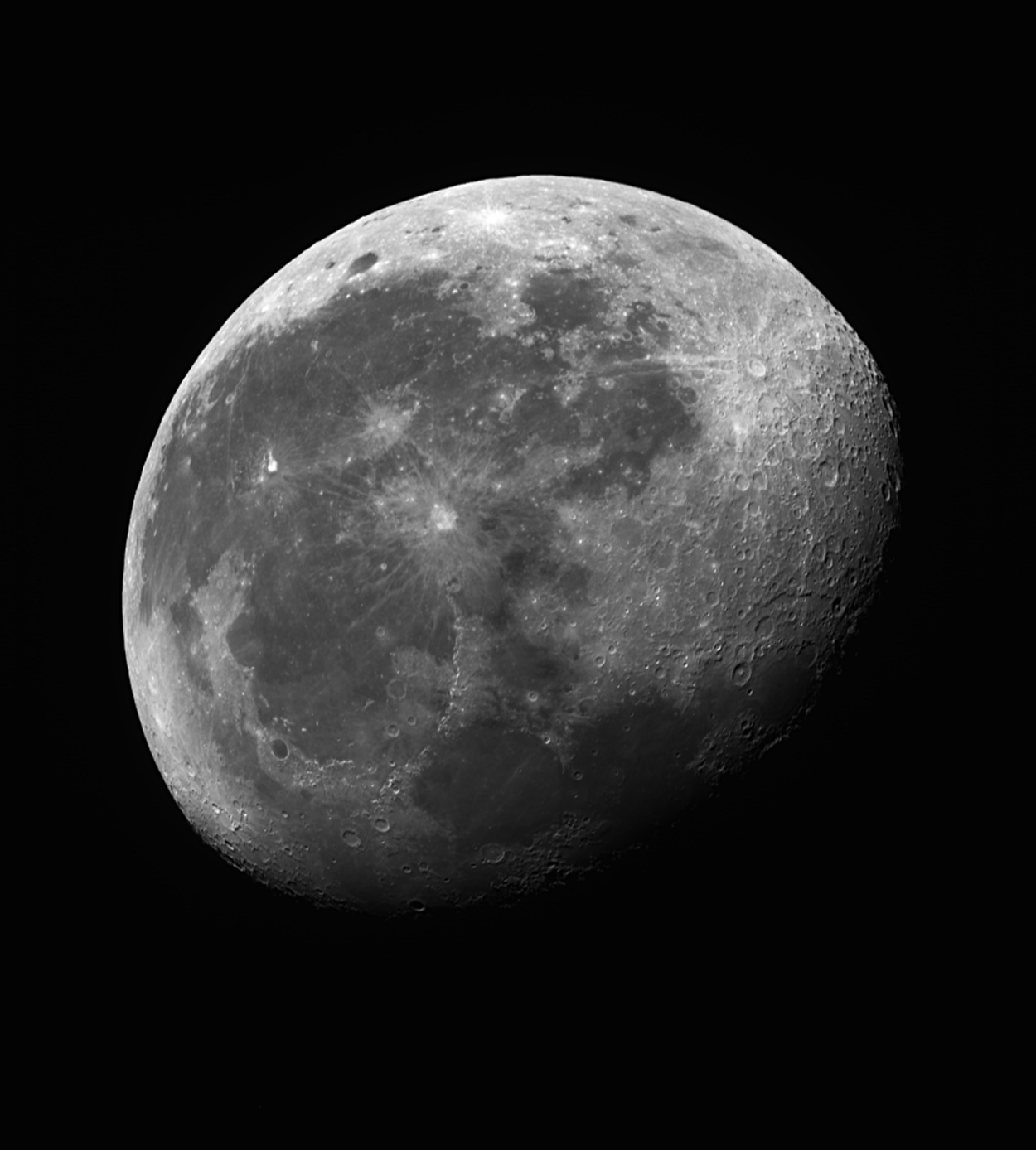
Da una prospettiva insolita per un satellite di osservazione terrestre, la missione Copernicus Sentinel-2 cattura questa immagine dell'unico satellite naturale della Terra.
La missione Sentinel-2 ha acquisito questa immagine lunare ruotando lateralmente uno dei suoi satelliti per consentire l’osservazione della Luna, anzichè della Terra. Questa operazione fa parte di un regolare processo di calibrazione, per cui la stabile intensità della luce lunare permette di rilevare e correggere anche i più piccoli cambiamenti nelle prestazioni della strumentazione di Sentinel-2. Questa operazione garantisce l'accuratezza dei dati durante tutta la missione, fondamentale per le applicazioni.
Ovviamente, Sentinel-2 non è l'unica missione che osserva la Luna. La missione Artemis II, lanciata dal Kennedy Space Center in Florida (USA), sta viaggiando intorno alla Luna con quattro astronauti a bordo. La missione li porterà a poche migliaia di km dalla Luna, offrendo loro una vista unica della superficie lunare, incluse alcune aree mai viste prima dall'uomo.
Con una risoluzione spettacolare di circa 5 km, questa immagine mostra alcune zone di riferimento famose, tra cui i crateri Tycho, Copernicus e Kepler, nonchè i mari della Pioggia, Serenità e Tranquillità. In questa immagine in alto a destra si trova il grande cratere chiaro d'impatto chiamato Tycho. Il Mare della Tranquillità è il luogo dove la missione Apollo 11 atterrò nel 1969, portando i primi esseri umani sulla superficie lunare. L'ultima missione con equipaggio, Apollo 17, atterrò nella valle Taurus-Littrow tra Serenità e Tranquillità.
Con il lancio della missione Artemis II la Luna è nuovamente sotto i riflettori con il contributo essenziale dell’Europa. Per 10 giorni la navicella Orion e il suo equipaggio saranno alimentati dal Modulo di Servizio Europeo dell'ESA, che spinge e mantiene la vita in questo viaggio storico: il primo di questo genere dai tempi di Apollo 17, nel 1972, oltre mezzo secolo fa.
Scarica immagine Hi-Res (159,71 KB - .JPG)
Scarica immagine Hi-Res (3,33 MB - .TIF)
---
Eyes on our Moon
In an unusual perspective for an Earth-observing satellite, the Copernicus Sentinel-2 mission captures this image of Earth’s only natural satellite.
The Sentinel-2 mission acquired this lunar image by rolling one of its satellites sideways to view the Moon instead of Earth. This is part of a regular calibration process, whereby the stable intensity of the Moon’s light makes it possible to detect and correct even the smallest changes in the performance of Sentinel-2’s instrument. This ensures data accuracy throughout the mission, which is critical for its applications.
Of course, Sentinel-2 is not the only mission that focuses on the Moon. The Artemis II mission, launched yesterday from the Kennedy Space Center in Florida, US, is travelling around the Moon with four astronauts on board. The mission will bring them to within a few thousand km of the Moon, giving them a unique view of the lunar surface, including some areas that have never before been seen by human eyes.
With an impressive resolution of around 5 km, this image features some famous landmarks, including the Tycho, Copernicus and Kepler craters, and the seas of Rain, Serenity and Tranquillity. The Tycho Crater is the large, pale, impact crater at the top-right of the Moon in this image. The Sea of Tranquillity is where the Apollo 11 mission touched down in 1969, placing the first humans on the lunar surface. The last crewed mission, Apollo 17, landed in the Taurus-Littrow valley in between Serenity and Tranquillity.
With the launch of the Artemis II mission, the Moon is once again in the spotlight, and Europe’s contribution is essential. For 10 days, the Orion spacecraft and its crew will be powered by ESA's European Service Module, which propels and sustains life on this historic journey, the first of its kind since Apollo 17 in 1972, over half a century ago.
[Credits: contains modified Copernicus Sentinel data (2025), processed by ESA - Translation: Gianluca Pititto]