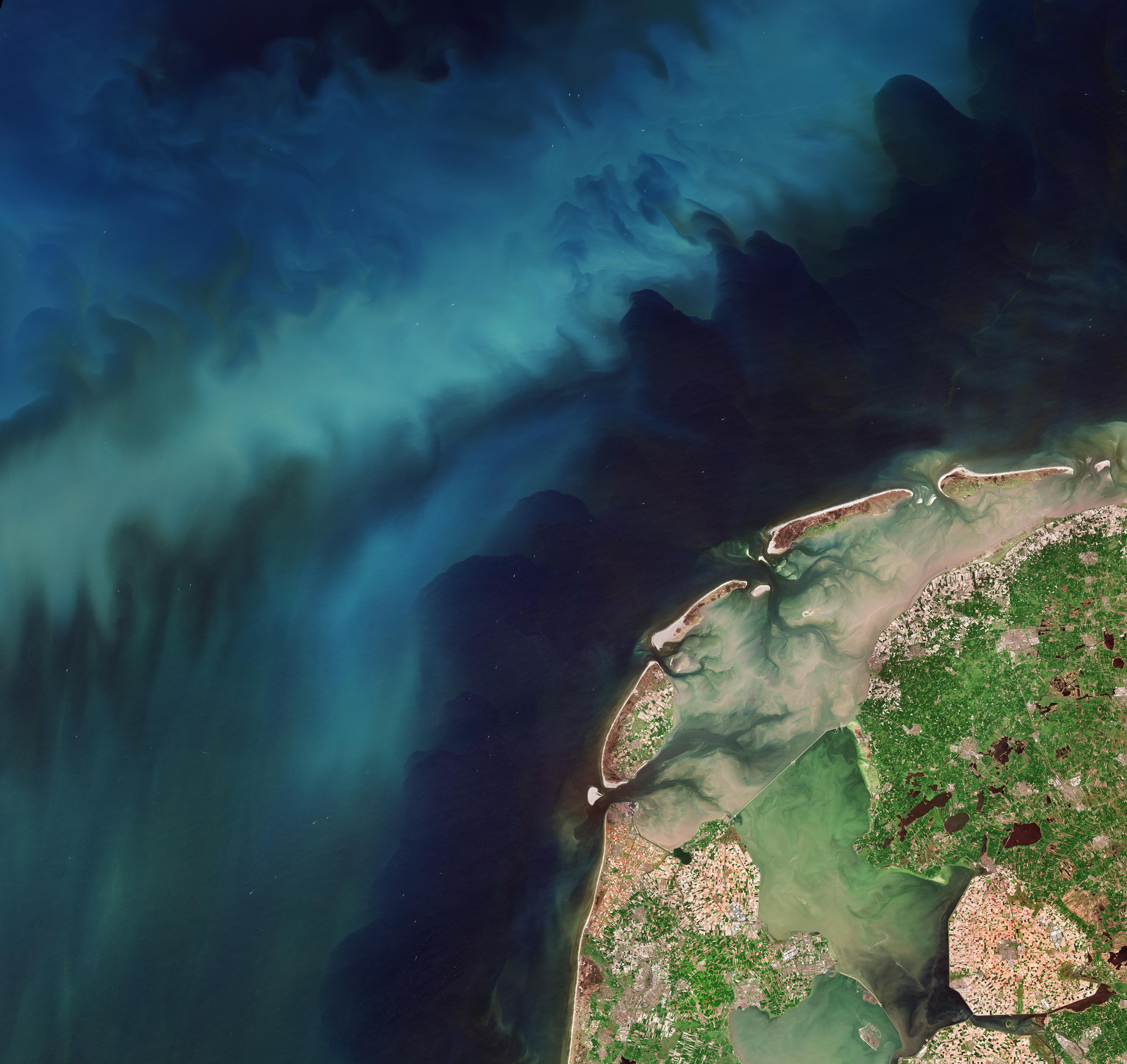
Questa immagine è stata catturata il 21 aprile 2026 dalla missione Copernicus Sentinel-2 e mostra una doppia fioritura nei Paesi Bassi: una schiera di colori vibranti nei campi di tulipani, accanto a mulinelli verde-blu di fitoplancton nel Mare del Nord.
Nell’immagine è visibile la punta nord-occidentale dei Paesi Bassi, formata da un complesso sistema di isole, penisole e corpi idrici. L’area mostrata include in basso a destra parte della provincia olandese di Flevoland, Olanda settentrionale ad ovest e Frisia a nord, con l’arcipelago basso delle isole Frisone occidentali presenti lungo la costa e gradualmente inarcate verso la terraferma.
Questa catena di isole è separata dalla terraferma dalla stretta fascia di acque basse e paludi fangose mareali del Mare di Wadden, un'insenatura di acqua salata del Mare del Nord. Le acque di colore marrone indicano un alto contenuto di sedimenti, che contrasta con le acque più scure del mare esterno. Due dighe sono visibili come linee bianche attraverso le acque interne e che danno origine a due corpi d'acqua dolce separati: il più grande lago IJsselmeer ed il più piccolo lago Markermeer.
Il mosaico di campi agricoli visibili sulle isole e sulla terraferma mostra i campi nelle varie fasi di crescita o di raccolto. Le principali colture della zona includono cereali, patate, barbabietole da zucchero, cipolle e, naturalmente, tulipani.
Nell'immagine i splendidi campi di tulipani in fiore appaiono in vari colori, che vanno da tonalità di giallo e rosso al viola. Della durata di solo poche settimane, la bellezza di questi colori attira normalmente milioni di visitatori da tutto il mondo. Quando i tulipani raggiungono la piena fioritura, i contadini rimuovono rapidamente le loro teste colorate per dirottare l'energia dei fiori verso i bulbi e aiutare così a mantenerli forti.
Al contrario, la maggior parte delle acque esterne del Mare del Nord è coperta da un diverso tipo di fioritura: il fitoplancton. Queste microscopiche piante marine vicino alla superficie dell'acqua sono di gran lunga la forma di vita più abbondante che si trova nell'oceano. Durante questo periodo questi mari settentrionali vengono arricchiti di minerali derivanti dalla miscela delle acque superficiali con quelle più profonde. Il fitoplancton dipende da questi minerali, rendendo comuni in Primavera fioriture di questo tipo.
Sebbene alcuni tipi di plancton siano individualmente microscopici, la clorofilla che usano per la fotosintesi colora collettivamente l’aspetto delle acque circostanti, fornendo un mezzo per rilevare dallo spazio questi minuscoli organismi grazie a sensori dedicati, come l'Imager Multispettrale di Sentinel-2. Diversi tipi e quantità di fitoplancton mostrano colori differenti, come le tonalità blu e verdi che si osservano in questa immagine.
Scarica immagine Hi-Res (3,03 KB - .JPG)
Scarica immagine Hi-Res (595,06 MB - .TIF)
---
Netherlands in bloom
Captured by the Copernicus Sentinel-2 mission on 21 April 2026, this image shows a double bloom in the Netherlands: an array of vibrant colours in the tulip fields as well as the blue-greenish swirls of phytoplankton in the North Sea.
In the image we can see the northwestern tip of the Netherlands, made up by a complex system of islands, peninsulas and water bodies. The area pictured encompasses part of the Dutch provinces of Flevoland to the bottom right, North Holland to the west and Friesland to the north, with the low-lying archipelago of the West Frisian Islands along the coast and gradually curving toward the mainland.
This chain of islands is separated from the mainland by the narrow belt of shallow waters and tidal mud flats of the Wadden Sea, a saltwater inlet of the North Sea. The brown-coloured waters indicate a high sediment content, which contrasts with the darker waters of the outer sea. Two dams are visible as white lines across the internal waters creating two separate freshwater bodies: the larger IJsselmeer lake and the smaller Markermeer.
The patchwork of agricultural fields visible on the islands and mainland show the fields in the various stages of growth or harvest. The main crop types in the area include cereals, potatoes, sugar beet, onions and, of course, tulips.
In the image, the stunning tulip fields in flower appear in various colours ranging from shades of yellow and red to violet. Lasting just a few weeks, the beauty of these colours normally attracts millions of visitors from all over the world. When the tulips reach full bloom, the farmers quickly remove their colourful heads to divert the flowers' energy back to the bulbs to help keep them strong.
In contrast, most of the outer North Sea waters are covered with a different kind of bloom: phytoplankton. These microscopic marine plants near the water’s surface are by far the most abundant type of life found in the ocean. During this period, these northern seas are enriched with minerals from the mixing of surface waters with deeper waters. Phytoplankton depend on these minerals, making blooms like this common in springtime.
Although some types of plankton are individually microscopic, the chlorophyll they use for photosynthesis collectively tints the colour of the surrounding waters, providing a means of detecting these tiny organisms from space with dedicated sensors, such as Sentinel-2’s multispectral imager. Different types and quantities of phytoplankton exhibit different colours, such as the blues and greens in this image.
[Credits: contains modified Copernicus Sentinel data (2026), processed by ESA - Translation: Gianluca Pititto]