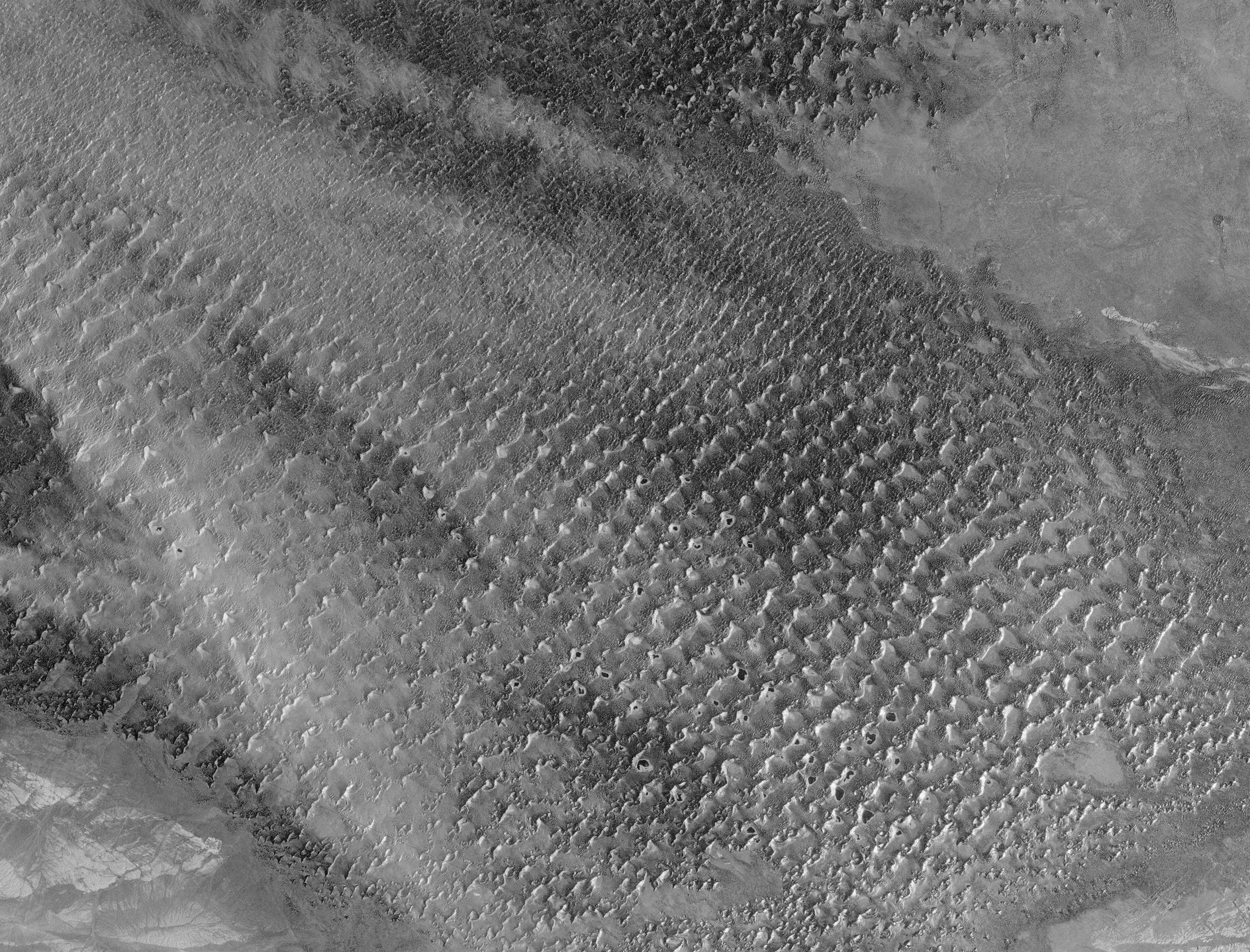
Questa immagine di Copernicus Sentinel-1 mostra una parte del deserto di Badain Jaran, nel nord-ovest della Cina.
Con una superficie di circa 49.000 kmq Badain Jaran è il terzo deserto più grande della Cina. Si trova all'interno del più grande deserto del Gobi, sull'altopiano di Alxa, a circa 1200 m sul livello del mare. Il remoto deserto di Badain Jaran mostra un paesaggio diversificato contenente meraviglie naturali mozzafiato, come forme del territorio erose dal vento, oasi ed eccezionali dune imponenti intervallate da laghi desertici.
In questa immagine radar acquisita nel mese di settembre 2025 l'effetto a catena evidenzia l'elevata densità di dune di sabbia parallele, incluse alcune delle più alte al mondo, tra cui una di esse che raggiunge l'altezza record di 460 m, più alta dell'Empire State Building. Sebbene la maggior parte delle dune sia dinamica a causa della mobilità della sabbia, le megadune più alte sono solitamente ferme, con un nucleo solido e che in inverno appaiono coperte di neve.
Badain Jaran è uno dei pochi luoghi al mondo dove si verifica il fenomeno delle 'dune di sabbia cantanti'. Le sabbie cantanti si generano quando il vento del deserto solleva lo strato superiore di sabbia dallo strato sottostante, facendo sì che la sabbia emetta un suono acuto e forte che può durare fino a diversi minuti. Il 'canto' è più evidente nell'estate secca e calda, quando il vento è forte ed i pendii sono ripidi.
Il deserto di Badain Jaran è anche noto per ospitare oltre 100 laghi, che nell'immagine si possono riconoscere come macchie nere nascoste tra le dune. Sono laghi d'acqua dolce, oppure laghi estremamente salati. Danno al deserto il suo nome, che in mongolo significa 'laghi misteriosi'. La loro origine, infatti, è ancora oggetto di dibattito, anche se si ritiene che siano alimentati da sorgenti sotterranee.
La grande varietà di paesaggi porta a molti habitat diversi e quindi ad una elevata presenza di biodiversità. Nonostante sia un deserto sabbioso, Badain Jaran ospita un'abbondante flora e fauna ed i suoi laghi offrono anche un ambiente favorevole a numerose specie acquatiche.
Scarica immagine Hi-Res (20,97 MB - .JPG)
Scarica immagine Hi-Res (411,13 MB - .TIF)
---
Singing dunes and mysterious lakes
This Copernicus Sentinel-1 image features part of the Badain Jaran Desert in northwestern China.
With an area of about 49 000 sq km, Badain Jaran is China’s third largest desert. It lies within the larger Gobi Desert in the Alxa Plateau at about 1200 m above sea level. The remote Badain Jaran Desert displays a varied landscape of stunning natural wonders, such as wind-eroded landforms, oases and remarkable towering dunes interspersed with desert lakes.
In this radar image from September 2025, the ripple effect denotes the high density of parallel sand dunes, including some of the tallest in the world, with one reaching the record height of 460 m – higher than the Empire State Building. Although most dunes are dynamic due to shifting sand, the tallest megadunes are usually stationary with a solid core and in winter they are covered with snow.
Badain Jaran is one of the few places in the world where the 'singing sand dunes' phenomenon occurs. Singing sands are generated when the desert wind pulls the top layer of sand off the layer below, resulting in the sand emitting a sharp, loud sound that can last up to several minutes. The ‘singing’ is most prominent in the dry, hot summer when the wind is strong and slopes are steep.
The Badain Jaran Desert is also well known for hosting over 100 lakes that can be seen in the image as black spots nestled among the dunes. They are either freshwater or extremely saline lakes. They give the desert its name which means ‘mysterious lakes’ in Mongolian. Their origin in fact is still debated although they are believed to be fed by underground springs.
The wide variety of landscapes leads to many different habitats and hence a high level of biodiversity. Despite being a sandy desert, Badain Jaran is home to abundant plant and animal life, and its lakes also offer a favourable environment for a large number of aquatic species.
[Credits: contains modified Copernicus Sentinel data (2025), processed by ESA - Translation: Gianluca Pititto]